By Meghan Rosenberg, Collaborative Coaching Specialist at WordPowered
What was this like for you? How can I support you? What else do you need?
St. Stephen’s Youth Programs (SSYP), an enrichment program serving Boston Public School youth of all ages after school and during the summer, had engaged WordPowered for a year of working with their five program leads.
Ahead of me stretched fifteen biweekly professional development sessions, unplanned.
I had three broad goals: Data collection, evaluation, and program development. I was itching to map out all the sessions and have concrete plans in place, but I knew I would be pairing all my planning with input from SSYP.
WordPowered coaches love to model the strategies we teach, so it was clear what I had to do. To teach systems and structures for collecting the data, it would be necessary for me to collect participant feedback and plan the sessions based on that feedback.
I began by meeting with the director and each of the five program leads to get to know them and ask them what their needs and hopes were for our partnership. They shared some of their anxieties: They worried about impersonal virtual sessions, about lectures, about academic jargon. “Don’t worry,” I assured them, “that’s not what we’re about.” I was there to make our time together what they needed. We would collaborate, have discussions, move around, laugh.
And we did! Yet, I struggled to find my own footing.
Every session, I asked for feedback, asking variations of What was this like for you? How can I support you? What do you need? The feedback was mostly positive, but it didn’t match what I was seeing in their engagement and body language. Often, fewer than half the participants filled out the feedback survey, and the feedback I did receive was vaguely pleasant responses like “Everything went well.”
I realized that I needed to be more transparent about the process, so I turned it up to 11. At the beginning of every session, I began to share my takeaways from the previous session’s feedback survey and how I had used the feedback in my planning. Remarkably, the amount and quality of the feedback they gave me increased quickly. At one point, I shared all the quantitative data for the year (“ratings” of each session) in the form of a graph. I felt vulnerable in the moment, but then I saw the power of transparency when I asked them to reflect on how it felt for them: They knew I was listening.
Once the program leads had their own data back from the mid-year surveys we had created together, the energy shifted. I shared with them all the things I do with my own data, and how it offers a thrilling window into what’s really going on with their youth participants. What is it like for young people? How can the program leads support them? What do they need?
We had finally hit our groove. I created space for them to be on both ends of a feedback survey, simultaneously: In one context, they gave thoughtful feedback and saw it implemented, and in the other, they worked to ask the right questions and make changes accordingly. This shift happened when I realized that the missing piece had been a willingness to pull back the curtain on my own practice, showing the imperfections, the work-in-progress, the active growth. My modeling of a data collection cycle, mirroring what I was teaching, took the process from the realm of theory and made it visible and concrete.
We all thrive when we can experience what we are learning.
The superpower of modeling is that it offers adults the chance to experience a strategy as students, giving them permission to be imperfect by letting go of the illusion that we, as facilitators, have it all figured out. If we did, we’d miss the chance to respond to the humans in front of us.
What was this like for you? How can I support you? What do you need?
Don’t forget to check out our Collaborative Coaching team’s Empowering Writing Instruction Framework, which encapsulates our shared vision, and provides a tool that helps us communicate our inclusive and equitable approaches to others.
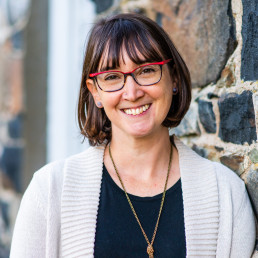
Meghan Rosenberg
she/her
Meghan has spent her career in public education in and around Boston. Most recently, she was an educational consultant and curriculum writer, working on Mass Insight’s School Improvement Team supporting district-wide equity audits around Massachusetts, as well as creating an ongoing curriculum series for The Immigrant Learning Center in Malden. Prior to consulting, Meghan was the founding middle school Humanities teacher and team leader at a Boston K-12 charter school. Meghan holds a Bachelor of Arts in Education and Linguistics from Brown University and a Master’s in Teaching Secondary English from Tufts University, as well as active Massachusetts teaching licenses in English, History, and English as a Second Language.
Meghan is passionate about systems changes for equity and wellbeing; she is looking forward to being back in schools and working with educators on a daily basis. In her various roles, she works to create educational spaces where all students can thrive as their individual selves and develop the tools to shape the world around them. At home, Meghan enjoys getting involved with her local community and school system, spending time outside, and reading science fiction, but can realistically be found at a playground with her young daughters or discussing the finer points of Bluey.
WordPowered (formerly WriteBoston) helps teens find the power in their voice. We equip young people with the critical reading and writing skills they need to express themselves—and to be heard. To expand our reach, we partner with schools and educators to create environments where students feel safe to explore their power. Whether they’re dreamers, writers, musicians, athletes, or still exploring, we help teens discover and strengthen their voices to change their worlds for the better. In the coming weeks, our team will be storytelling about the pilot Teacher Institute in collaboration with our Teens in Print’s program, Summer Journalism Institute. We intend to tell dignifying stories about the educators who are finding community with us–grateful for the trust they are given to create, imagine, talk, and share freely; and to understand the change we seek to make in public education by finding allies among educators out there from whom we can learn.