By Meredith Moore, Ph.D, Coaching Specialist at WordPowered
Take a moment to think about your experiences with writing as a young person:
- Did you ever feel empowered through writing?
- Did you have opportunities to share your experiences, perspectives, and opinions with others in writing?
- Did you believe that your voice mattered?
If you answered “yes” to any of these questions, then you know the power that writing can have for young people. You can probably remember specific moments when you thought critically, expressed yourself powerfully, or advocated for change. You may have visceral memories of your emotions at those moments— emotions like connection, confidence, and pride.
I still have a vivid memory of writing a letter of complaint after attending a speaker series for high-achieving high school seniors. I expressed righteous indignation about the lack of diversity among the presenters. Of the approximately 30 speakers who were supposed to inspire the gathered young people to greater achievements, perhaps 8 were women or people of color. As angry as I was about this misrepresentation, I was also proud of myself for communicating my anger to the event organizers and hopeful that my letter would lead to improvements. Mailing that letter was an empowering experience.
Are Your Students Empowered?
For the teachers who are reading this, now ask yourself, how often are your students empowered through writing?
If you are like many teachers, there may be a gap between the powerful experiences that you want your students to have, and what is actually happening in your classroom. Many things can stand in the way. Curriculum materials. Testing. Time. Energy. Inertia.
I get it! That’s why my team at WordPowered offers professional learning opportunities and resources that help educators narrow the gap between their dreams for their students and the current realities.
“Through writing, I found my voice. And more importantly, I realized that my voice mattered. Turns out, people actually cared about what I had to say, and that was kind of a big deal.”

A Framework for Empowering Writing
Empowering literacy is one of WordPowered’s core values. Our Teens in Print (TiP) after-school and summer journalism programs offer Boston youth a chance to tell the stories that matter to them. Not only do our students develop the writing skills to communicate their perspectives and opinions effectively, but they get to reach a wide audience by publishing their articles on our online platform.
TiP alum Shaniece Clarke reflected on how profound this was for them. “Through writing, I found my voice. And more importantly, I realized that my voice mattered. Turns out, people actually cared about what I had to say, and that was kind of a big deal.”
Our Collaborative Coaching team wants to make it easier for classroom teachers to offer their students empowering experiences like these. That’s where our framework for empowering writing instruction comes in. Teachers can use the framework to design writing assignments that students will care about and to teach writing in ways that help students become powerful communicators.
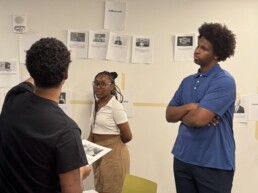
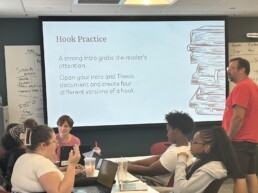
We introduced the framework during the summer of 2025, at a Teacher Institute embedded at our summer program for high school students. Teachers spent three days with us. They heard from youth reporters, who shared how much more they like writing when they get to share their perspective on topics that matter to them with a real audience. Teachers also observed empowering writing instruction in action and used the framework to plan or adapt their own writing units.
While none of these teachers have the power to turn their classroom into a newsroom, all were excited to shake up the status quo by bringing elements like meaningful choice, real audiences, and authentic formats and genres into their assignments. One reflected, “I really appreciated the empowering writing framework. It’s easy as educators to feel siloed and let authentic audience and product fall to the wayside a bit, and this was a really good reminder of the impact we can and should be having as educators.”
Taking Empowering Instruction Back to the Classroom
Through brainstorming with one another and talking with us, participants came up with new ways for students to create and share meaningful work. They figured out how to offer students agency and amplify youth voice, while still addressing standards and using mandated curriculum materials.
For instance, a 9th-grade teacher designed an assignment called “Names Matter: Naming Landmarks in Our City.” In this assignment, students will:
- Notice the names of buildings and other landmarks and the significance of the names given to them by the city.
- Learn who decides on place names and how it is decided.
- Identify a place in Boston that they feel is in need of a name change.
- Use their research skills to discover the person behind the location, and take a look into the immediate community to select a new name for the landmark.
- Craft a letter or petition to educate their audience as to why there is a need for a name change and to call for a new name.
- Share their letter or petition with City Councillors, School Committee members, or families in the community.
Teachers, how might our empowering writing framework help you to design instruction that empowers your students?
We will be collaborating on empowering writing instruction with a new group of teachers this coming July, at our 2nd Teacher Institute. Will you join us there?

Meredith Moore, Ph.D
she/her
Meredith is our Collaborative Coaching Specialist here at WordPowered.
She is an equity-focused educator with over 20 years of experience. With a B.A. in History and Literature from Harvard University and an M.S. in Childhood Education from Bank Street College, she had the pleasure of spending the first decade of her career teaching elementary and middle school students in three states. As she experienced different contexts, including public, charter, and private schools,
Meredith became increasingly concerned about the stark inequities in our current educational system. She left the classroom for a Ph.D. at Boston College, in order to research approaches to making schools more equitable and inclusive. In recent years, Meredith has brought an equity lens to roles as instructional coach, curriculum developer, researcher, and teacher educator. She is also the founder of Kids for Racial Justice, which supports children in developing the commitment and tools to dismantle racism.
Through her role as an Instructional Coach at WordPowered, Meredith seeks to enhance teachers’ capacity to foster the brilliance of young people and ultimately to create more equitable schools. In her free time, she can be found practicing guitar, climbing at the rock gym, or encouraging her own kids to question white supremacy, gender norms, and other systems of oppression.