By Abdi Mohamed Ali, Ed.DExecutive Director at WordPowered
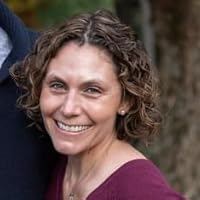
Laura Vultaggio teaches 11th- and 12th-grade English at Belmont High School, where she meets students across five sections, each class hovering at around 30 young people. The mathematics of it is staggering when you consider what she’s asking them to do: write longer, more complicated pieces that require individual attention, feedback that actually helps rather than merely marks. Twenty minutes per student, she calculates, beyond contract hours, deep into nights and weekends. It is, she says plainly, the hardest part of her job.
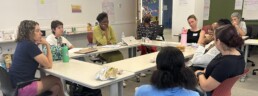
Last summer, Laura attended the Teacher Institute, ten years after her last WriteBoston workshop. She jumped at the chance to return, recalling those earlier sessions as “the most impactful Professional Development courses I’ve ever done.” Gathering with other teachers to think seriously about how writing instruction could transform her practice brought her back. WriteBoston has a new name now, WordPowered, which Laura appreciates: “Words matter and giving young people access to the power of words is, I think, what we’re here for.”
What draws her most powerfully is the balance: she collaborates with fellow teachers while also learning directly from students. “Obviously, the setting of the Summer Journalism Institute for that is not really directly a classroom setting,” she acknowledges, but the translation is there: the skills, the projects, the fundamental questions about how people learn to write and why it matters. And in the current climate, she adds carefully, these conversations with young people about what excites them and what worries them help her “remain hopeful that things will get better.”
The teachers at WordPowered’s Teacher Institute come from different schools. Laura spent ten years teaching in Boston before moving to Belmont, and yet what strikes her is how much they share in common. “We’re teaching the same exact texts. We’re teaching the same skills, the same strategies,” she observes. Suburban versus urban, different student populations, different structures, and still: the work is fundamentally the same. “I think people often like to talk about the differences across the board,” she says, “and I think it’s helpful to be reminded that things are actually more similar than they are different.”
Before her students at Belmont High even open Their Eyes Were Watching God, Laura begins with a study of dialect. Not Zora Neale Hurston’s dialect specifically, but their own. What dialects they’re familiar with, what dialect means, and what it signals. Then comes an exercise: four different people reading identical passages aloud. The students listen and draw conclusions about the speakers based solely on voice. What they inevitably discover is their own bias, the assumptions embedded in how we hear each other speak.
Only then does Laura introduce Hurston herself: the timeframe, the choice to write in dialect, her training as an anthropologist, her travels through the Everglades and Georgia recording the stories of formerly enslaved people, preserving their voices for posterity. Most crucially, Laura teaches them that Hurston “was not concerned with adjusting her writing or her characters for a white audience.” She was writing to preserve and elevate the Southern Black dialect, even as fellow writers like Langston Hughes disagreed, believing that white audiences needed to be considered as they were becoming more familiar with Black writers’ work. Hurston felt that approach “implicitly elevated white writers and their opinions over Black writers,” Laura explains, “so she was having none of that.”
The dialect is hard, Laura tells them so directly. “For the first couple of chapters, you’re going to need to read this out loud to yourself when you’re reading it at home, because it is very phonetic.” But there’s value in that difficulty, in the act of slowing down and listening to how language sounds, in refusing the expectation that art should make itself easy.
At the institute, Laura created something new: an assessment menu for Their Eyes Were Watching God with three options instead of the standard take-home essay. The conversations had made her rethink this assignment. And AI has changed what take-home essays can reveal about students’ capabilities.
Here are the ideas she came up with: students might create a soundtrack, perhaps six songs connected to specific scenes with written explanations of their choices. Or a museum exhibit with two original artworks and accompanying artist statements presented as a walking tour. Or a podcast episode centered on an issue from the novel: dialect, gender expectations, racism, sexism as it appears in their own lives.
But more than that, Laura is trying to help her students “make personal connections to the things that we’re reading, especially when we’re talking about texts that were written, especially from their perspective, a very, very long time ago.” She wants them to understand that the issues in these old books are still present, still urgent, still theirs.
Laura was taking in the feedback, the alternatives, the care taken in helping young people find their voices and recognize the voices that came before them at WordPowered’s Teacher Institute; she was rethinking how to do better, believing that it matters.
What will you rethink and create at this summer’s institute? Sign up today. Only three spots remain.